
Pork Ragu

Are you looking for more than just a quick weeknight pasta sauce? One that’s rich and comforting? This Pork Ragu is exactly that. It’s slow-cooked, full of flavor, and a crowd pleaser!
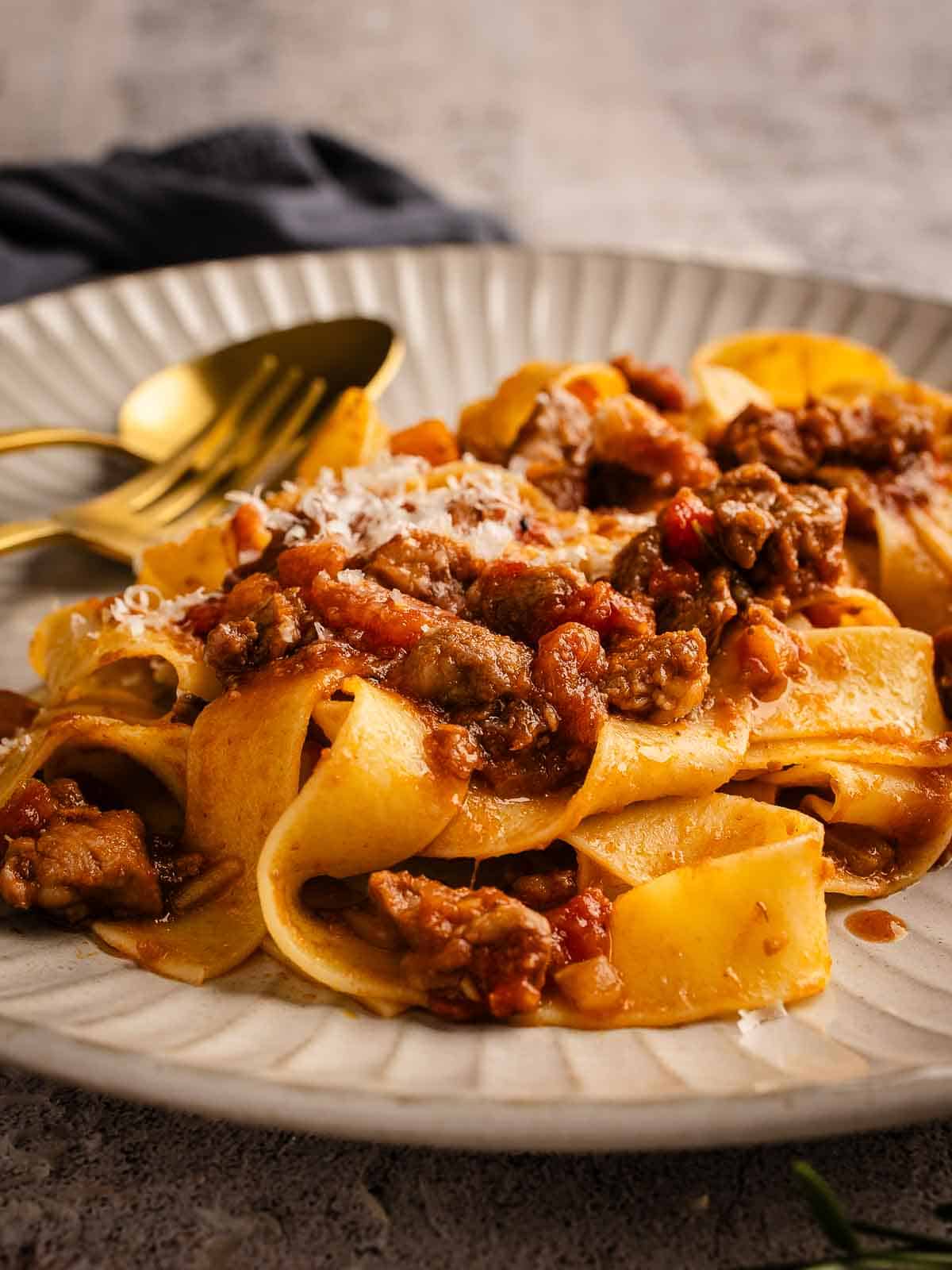
A few years ago, we enjoyed an extended stay in Siena in the Italian region of Tuscany. It was there that I sampled my first pork ragu. Actually, it was the classic dish from the area – wild boar ragu. It was rich, slightly gamey, and deliciously unctuous. This braised Pork Ragu takes me back to that little restaurant in Siena, as I hope it will for you, too!
Set aside a little time to make this ragu with pork, red wine, tomatoes, and a little pancetta. It’s simmered long and slow, developing into a thick, flavorsome sauce that’s perfect with pasta. It’s worth the wait!
Why you’ll love this recipe
- Big Flavor: Pork shoulder ragu is rich, rustic, and comforting. It sounds fancy, but it’s really just about simple ingredients and slow cooking.
- Tender: This recipe delivers meltingly tender pork that’s never dry or stringy. It’s just perfect!
- Thick Rich Sauce: Long, gentle simmering makes the pork extra soft with a sauce that is thick and incredibly flavorsome. It’s ideal to use in Lasagna al Forno instead of the usual ragu.
- Weekend Comfort Food: I won’t lie. This isn’t fast food. Set aside an afternoon to let it bubble away, and you’ll be rewarded with a pork ragu that everyone will love. While you wait for the sauce to be done, make handmade garganelli to serve with it.
For complete ingredient quantities and full instructions, please scroll to the printable recipe card at the bottom of the page.
Ingredients.
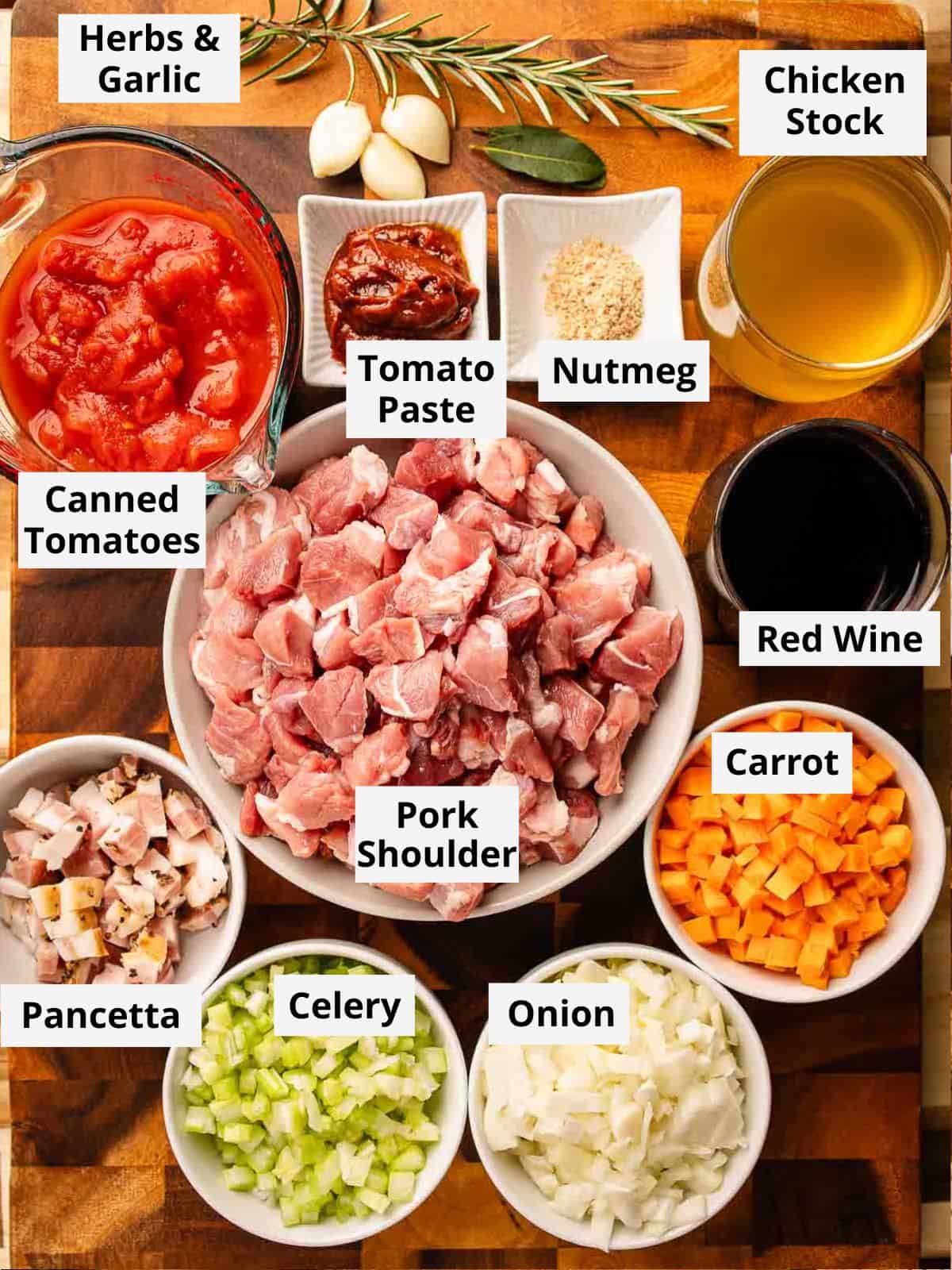
- Boneless Pork Shoulder: This is also known as pork butt or Boston butt. If the cut you buy has skin, you’ll need to trim it before cooking. I also like to trim it of excess fat. There’s a lot of fat and connective tissue in this cut of pork, so trimming a little of the excess doesn’t create a problem.
- Extra Virgin Olive Oil: Use extra virgin olive oil for the best flavor. Regular olive oil works too, but skip other oils.
- Vegetables: Onion, carrot, and celery create the base of a classic Italian soffritto.
- Pancetta: Pancetta is a cured pork belly with spices and pepper, and it adds a wonderful depth of flavor to the ragu. I usually buy a small whole piece, but you might find it sliced or diced. All will work for this recipe.
- Dry Red Wine: A good quality red wine works well. Don’t worry, the alcohol cooks off completely.
- Tomato Paste: Concentrated tomato paste is needed, not tomato puree, for this recipe
- Chicken Stock: Use store-bought, homemade, or, in a pinch, bouillon cubes or powder with water.
- Crushed Tomatoes: I usually prefer whole canned tomatoes because they are better quality, but I do like the organic crushed tomatoes by Mutti. Use what you can find. If you have whole tomatoes, crush them with your hands or a fork. Alternatively, blitz in a food processor for 10 seconds or so.
- Herbs: I prefer to use fresh herbs like rosemary and bay leaves. These are wonderful to have on hand. If you have extra, both freeze well.
- Fresh Nutmeg: Grate fresh nutmeg for the best flavor.
- Seasoning: All I use is salt for this recipe. There’s plenty of flavor and pepper in the pancetta.
See recipe card for quantities.
Instructions
Peel and finely chop the vegetables and pancetta first. Also, cut the pork into small pieces.
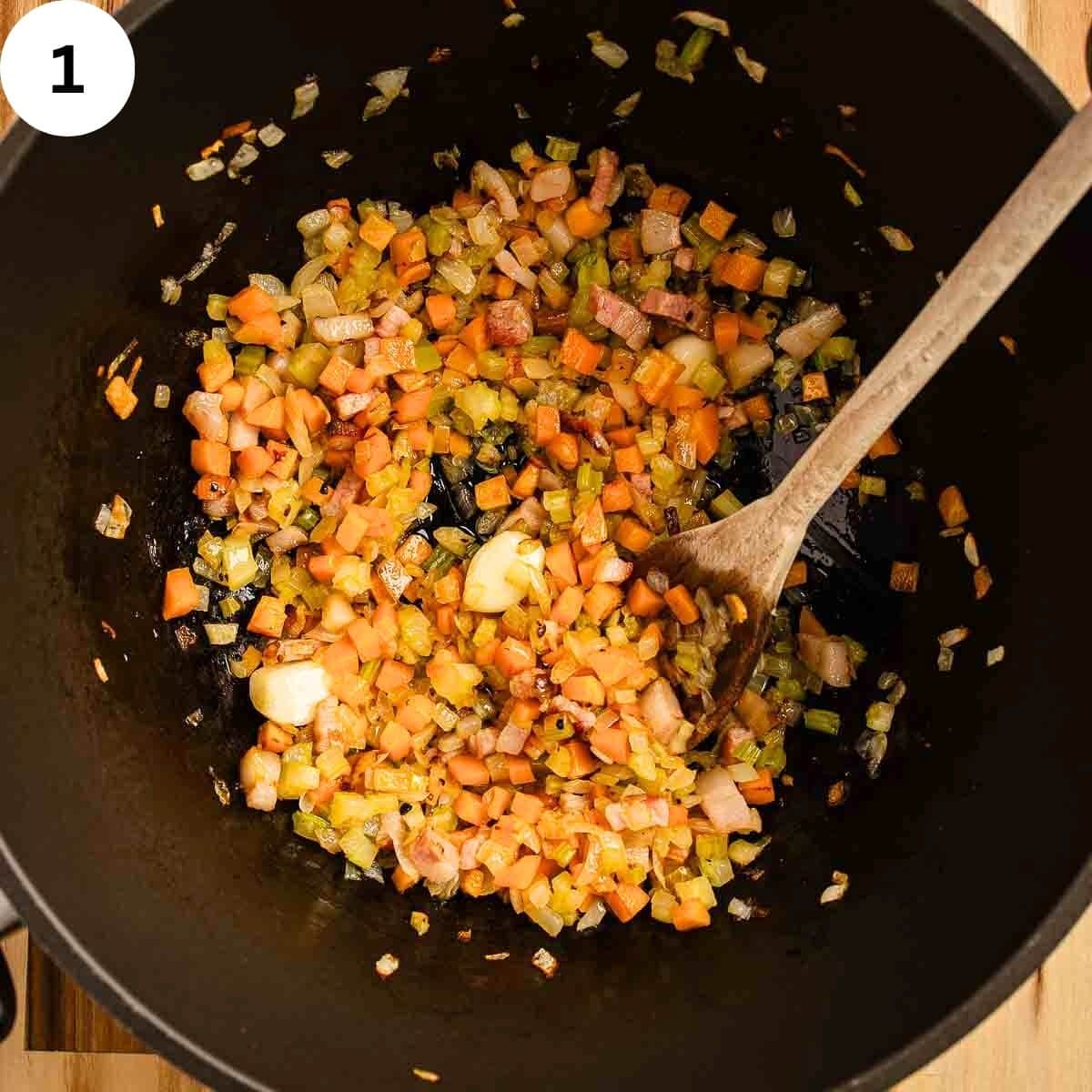
Heat the oil in a heavy-based pot, then add the vegetables and pancetta. Cook gently until the vegetables soften and the pancetta begins to release its fat.
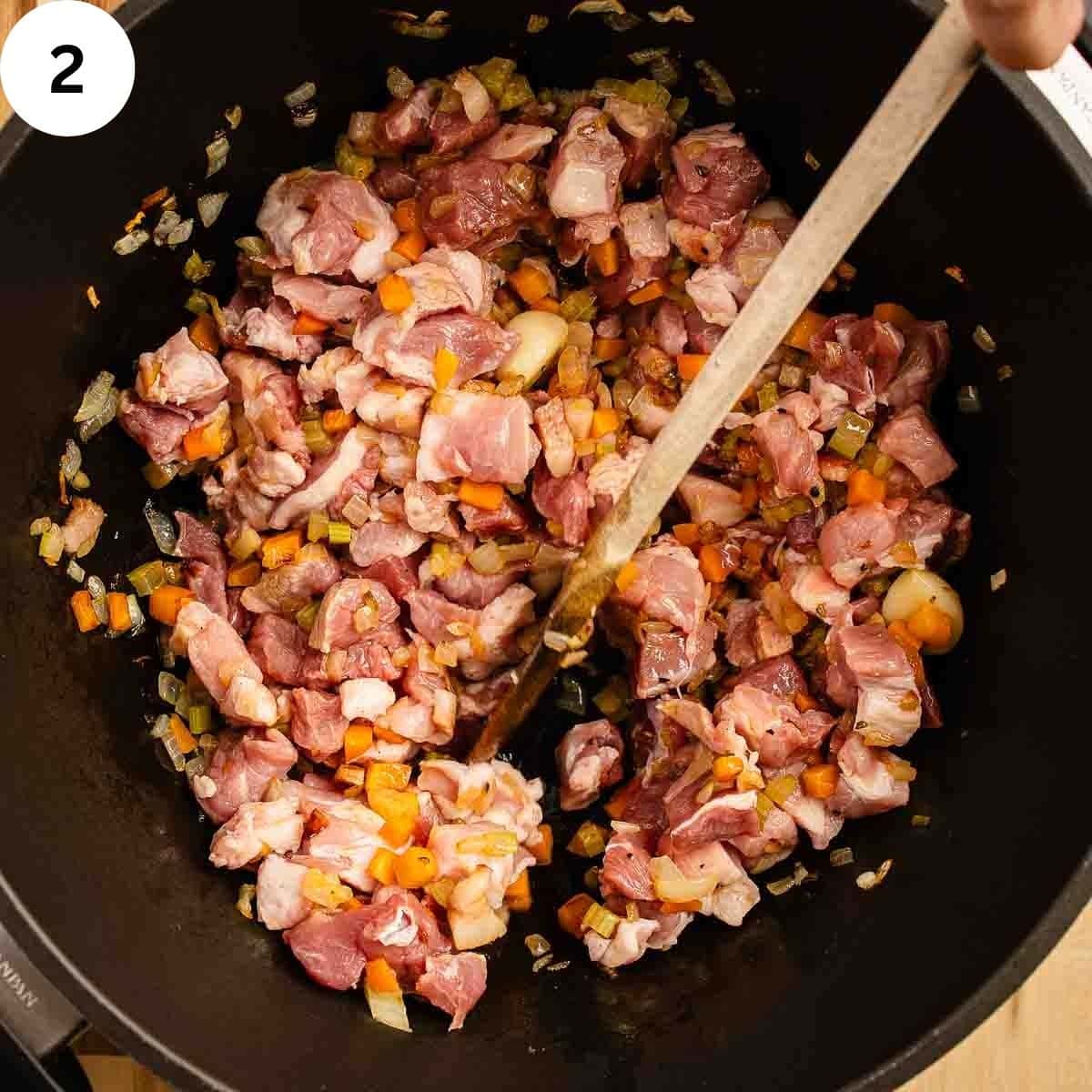
Add the chopped pork shoulder and cook until any liquid has evaporated.
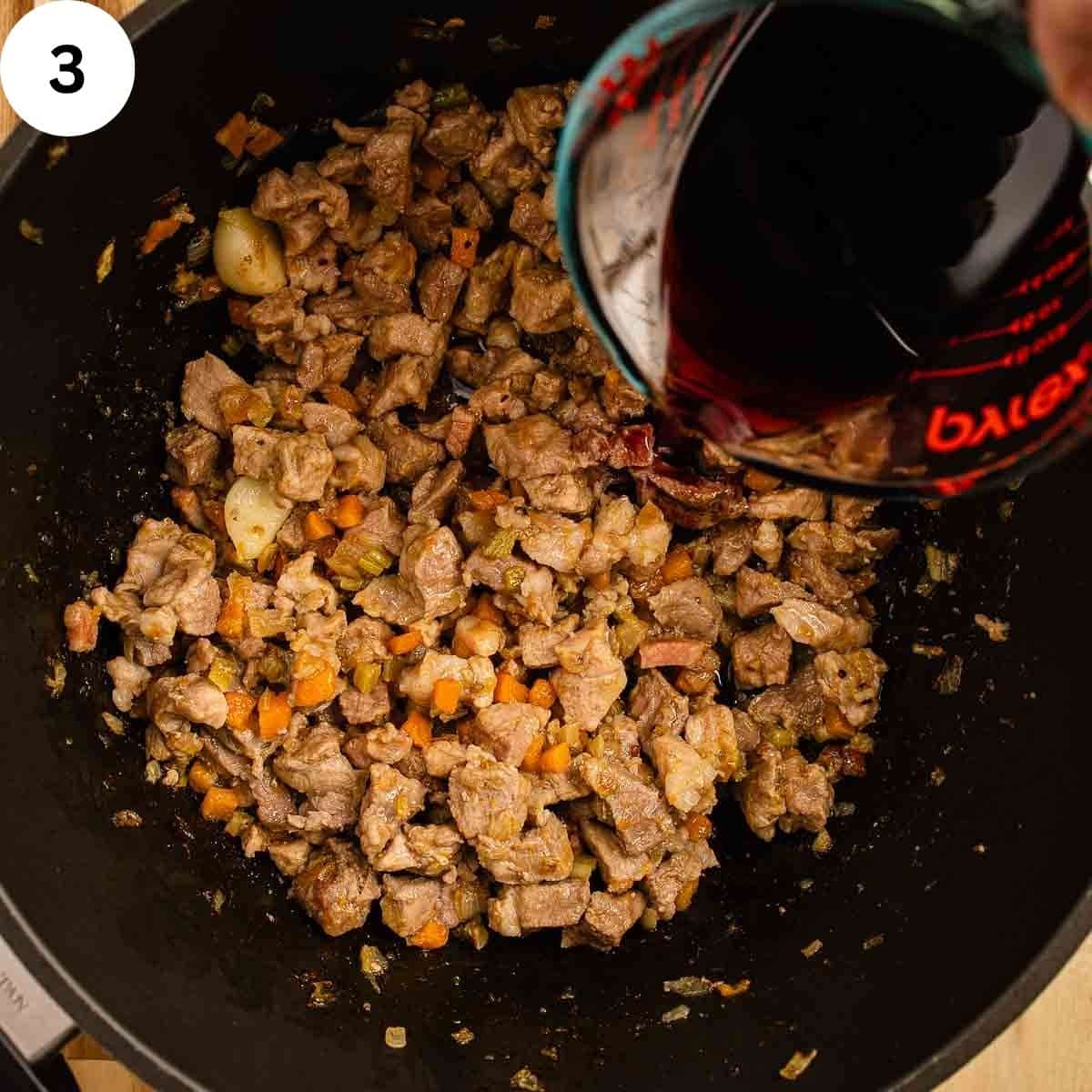
Stir in the wine and let the alcohol cook off.

Add the tomato paste, stir, and cook for a minute or so.
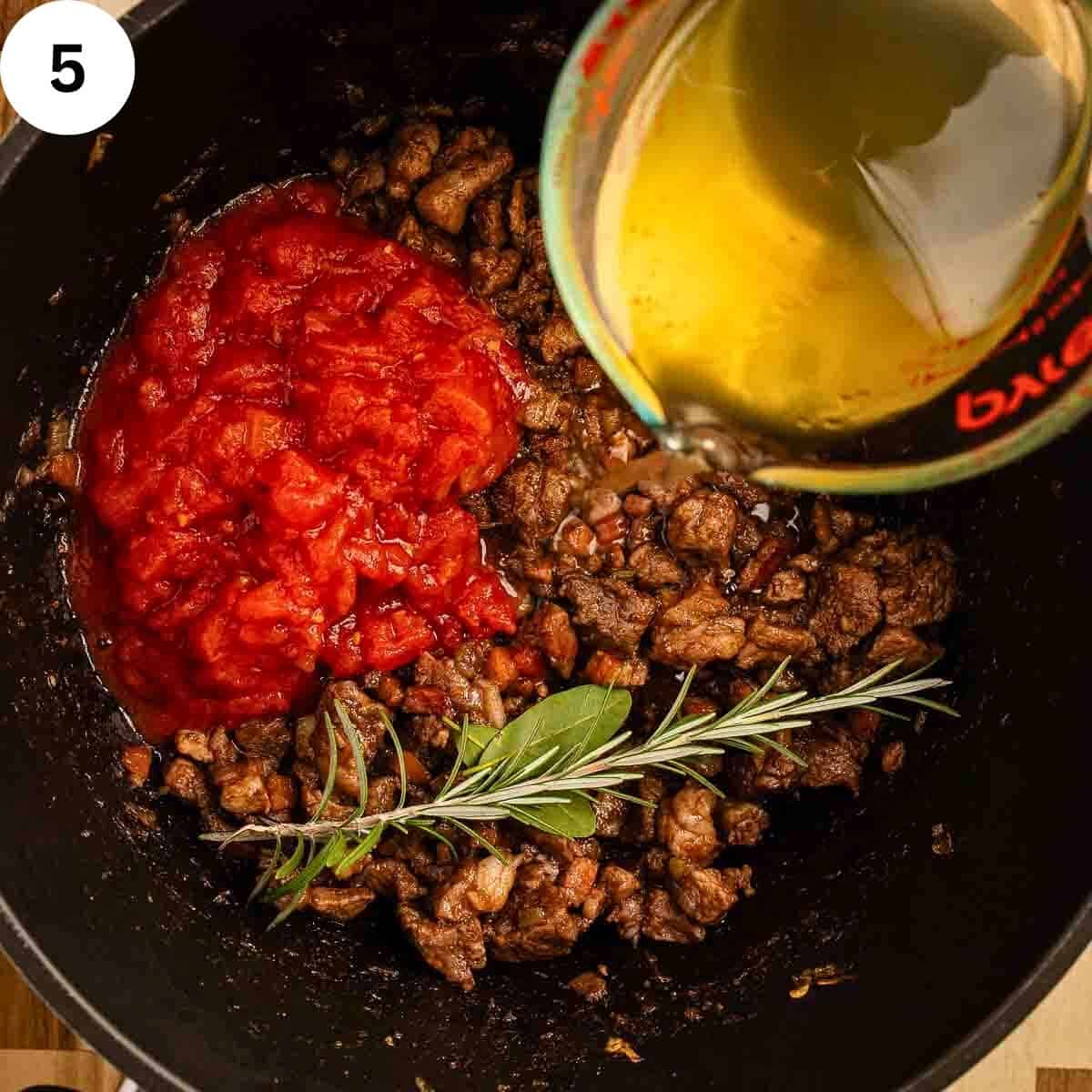
Pour in the chicken stock, with the crushed tomatoes, rosemary, bay leaf, ground nutmeg, and salt.

Stir and bring to a gentle simmer. Cover with a lid and cook gently for 2 hours.
Cook pappardelle pasta until al dente. Mix the pork ragu sauce through the cooked pasta, adding a little pasta water if needed. Serve with finely grated Parmigiano Reggiano cheese.
Marcellina’s Hint: If you know you’ll be short on time, do all the chopping the day before and store it in the fridge. This is the longest hands-on time. Being prepped and ready to go will make this recipe so much easier. Sometimes, I blitz the vegetables, one by one, in the food processor instead of finely chopping. If you choose to do this, avoid overprocessing. Just short bursts are usually enough.
Substitutions
- Pancetta – Use thick-cut bacon instead of pancetta. The flavor will be different, but it’s a good substitution.
- Red Wine – Instead of red wine, you can use dry white wine. The color will be less rich but it will still be delicious.
- Crushed Tomatoes – the canned tomatoes can be replaced with tomato passata.
Variations
- Spicy – add a little red pepper flakes to give the ragu a spicy kick.
- Deluxe – stir in a knob of butter and a handful of grated Parmigiano Reggiano cheese when the ragu is done. This adds extra richness and flavor.
Equipment
You may have read earlier, but it can be said too many times that this recipe benefits from a heavy-based pot or a large Dutch oven. For long cooking, this type of pot ensures even, slow heat, which is exactly what pork ragu needs.
Storage
The best part about a ragu is that it improves if made in advance. It’s the perfect make-ahead party dish. Allow the ragu to cool to almost room temperature, then store it in the fridge for 3-4 days. Don’t let it sit at room temperature for longer than 2 hours. If the weather is warm, pop it into the fridge within an hour.
It can also be frozen, after cooling, for longer storage. I often make up a double or triple batch of ragu for the purpose of having a quick meal from the freezer. And of course, some always goes home with my kids because that’s what an Italian mama does.
Top tips

- Use a heavy-based pot with a lid. This is ideal for the low, slow cooking that this Pork Ragu requires.
- Take time when preparing the vegetables. Chop them finely so they melt into the sauce and almost but not quite into the background.
- Cut the pork shoulder into small pieces and remove excess fat. Then cook it until all the moisture is gone and the meat starts to brown. Leaving the pork in big chunks can result in stringy, dry meat.
- Allow the alcohol in the wine to cook off. Once the pork is ready, pour in the wine and give it time to evaporate so the alcohol cooks away and the flavor concentrates. This avoids a winey taste, which can be unpleasant.
- Low and slow cooking is key. Cover with a lid and let the ragu gently simmer for about two hours. Check and stir periodically. If, after one hour, the sauce is still very thin, leave the lid slightly ajar for the next hour. Alternatively, if the sauce has reduced a lot, add a little hot water as needed.
FAQ
Pork Ragu is a classic Italian dish, particularly from the regions of Tuscany and Umbria, where rosemary and sage are often included. When we were in Tuscany, I loved the wild boar ragu with pappardelle, which is a classic Tuscan dish. In other parts of Italy, pork is usually combined with beef or veal for ragu, but some families prefer an all-pork ragu like this one.
Pork ragu should be simmered long and slow for two hours until the meat is meltingly tender. Very tender pork may be ready in an hour and a half. Alternatively, it may take an extra half an hour to achieve perfectly cooked pork.
Pulled pork ragu is a dish made with large pieces of pork shoulder that have been simmered in a tomato and wine sauce. When the pork is tender, the meat is shredded with two forks, then combined with the sauce. It is served in a similar way to a regular ragu on pasta or polenta, but can also be used to top crostini or crusty bread.
Pulled pork ragu is not a traditional Italian recipe; instead, it borrows from American barbecue pulled pork. Generally, ground or finely diced meat is used for an Italian meat sauce like ragu. In southern Italy, large pieces of meat are cooked in a tomato sauce for pasta. However, the meat is never shredded or pulled; instead, it is served separately as a second course.
What goes with pork ragu?

Like Tagliatelle alla Bolognese, this ragu is ideal served with egg pasta like pappardelle. Pappardelle pasta is wider than tagliatelle, which you can use as well. The chew and bite of handmade busiate also goes well with pork ragu. For a change, try serving this with creamy or fried polenta. It’s so good!
Made this recipe?
Please let me know if you liked it by leaving a ★★★★★ star rating and a review below. And remember to subscribe to my newsletter – it’s free!

Pork Ragu Recipe
Ingredients
- 2 tablespoons extra virgin olive oil
- 1 small onion
- 1 carrot
- 1 stick celery
- 4 cloves garlic
- 2 ½ ounces (75 g) pancetta See Note 1
- 2 pounds (900 g) boneless pork shoulder See Note 2
- ½ cup (125ml) dry red wine
- 1 ½ cups (360ml) chicken stock
- 3 tablespoons tomato paste
- 16 ounces (400 g) canned crushed tomatoes
- 1 sprig rosemary
- 1 bay leaf
- ½ teaspoon freshly grated nutmeg
- 1 teaspoon salt
To serve
- 1 pound (500 g) pappardelle pasta, cooked or pasta of choice
- Finely grated Parmigiano Reggiano cheese
Instructions
- Peel the onion and carrot, then finely dice them along with the celery. Peel the garlic cloves and leave them whole. Slice the pancetta, then cut into small strips or cubes.
- Cut the pork shoulder into roughly ½-inch pieces. They do not need to be exact.
- Heat a heavy-based pot or Dutch oven over medium heat. Add the oil, diced vegetables, whole garlic cloves, and pancetta. Cook gently for 8 to 10 minutes, stirring often, until the vegetables are soft and lightly golden.
- Increase the heat to medium-high and add the pork. Cook, stirring regularly, until any liquid has evaporated.
- Pour in the red wine and let it almost evaporate.
- Stir in the tomato paste and cook for about a minute.
- Add the crushed tomatoes, chicken stock, rosemary, bay leaf, ground nutmeg, and salt. Stir well.
- Reduce the heat to very low, cover with a lid, and simmer for 2 hours. Check and stir occasionally to make sure it is gently simmering, not boiling. If the sauce looks too dry, add a little hot water. If after an hour the sauce hasn’t reduced much, leave the lid slightly ajar so a little steam can escape to reduce the ragu.
- Taste and adjust the salt if needed.
- Serve with pasta such as pappardelle.
Notes
- Pancetta is a cured meat that is often sold as a piece but you may also find it in strips or diced.
- Pork shoulder is also known as Boston butt or pork butt. Purchase it as a whole piece. Remove the skin, if your pork shoulder has it, then trim off excess fat.
- Use a heavy-based pan with a lid.
- Chop the vegetables finely.
- Chop the pork by hand. It gives better texture than ground pork and avoids stringiness from shredded chunks.
- Allow the wine to evaporate.
- Keep the heat low. A fast boil will ruin the tenderness.
- Simmer long and slow.
Nutritional Estimate Per Serving
Nutritional Disclaimer
Nutritional information is an estimate provided by an online nutrition calculator. For accurate results, it is recommended that the nutritional information be calculated based on the ingredients and brands you use.

Lovely recipe, beautiful flavour. I used bacon instead of pancetta, because I had plenty of bacon on hand. Also used a combo of pork mince and pork shoulder chops (cut up small) as I had these on hand as well.
The combination of pork mince and pork shoulder chops is a great adaption of this recipe as is using bacon instead of pancetta! I so thrilled that you loved it, Karen.
This is a fantastic recipe. I really enjoyed the process. It was relaxing for me to prep the meat and vegetables and I loved the way my kitchen smelled when it was simmering on the stovetop. The final result was definitely worth the wait! So delicious. I feel like I accomplished something special with this recipe and look forward to making it again soon. Thank you Marcelina!
Pamala, I’m so happy that you enjoyed the process. It does take time but it’s a wonderful way to relax, take time and create incredible food. Thank you for your review and five star rating!
Yet again another great recipe from Marcellina. Grazie. Use my 5 qt Le Creuset Dutch oven which I find doesn’t brown the meat so well, but is a great vessel to use for long, slow cooking braises. I had to spoon off liquid as it was taking too long to get it to evaporate. The meat–super high quality from Macelleria Boasso in Grinzane Cavour–released a lot of liquid. Used a lovely Barbera d’Alba I had opened night before, but paired the dish with 2022 Barbaresco Autinbej from Ca’ del Baio. Absolutely a pairing made in Heaven. My only disappointment was not to have bread on hand for scarpetta which my husband loves.
BOTTOMLINE:
Wonderful dish. Fun and easy to make. Delicious to eat. HIGHLY RECOMMENDED COMFORT FOOD!
That’s true, Suzanne, the depth of a Dutch oven doesn’t allow for the correct amount of evaporation but it sounds to me that you overcame that and went on to create an amazing ragu! I love that you sought out the best quality meat from a good butcher. It’s a tip that’s very important. Thank you for your very thorough and wonderful review, Suzanne!
In the part wheel you have photos of the ingredients, you have labelled the celery as being onion.
Great pick up, Robyn! Fixed!
Scrumptdillyishious!!
Everything you mention about the flavors in the pancetta, butt and veggies meld so well!! Didn’t need to tweak it at all 😋.
I put a few cooling racks under my pot to keep @ simmer and not boil.
Going to freeze for Christmas and serve over homemade pasta. Thank you once again for sharing your amazing recipies.
On a side note, it’s a good thing for me to have to wait until early 2026 for your cookbook! Otherwise I would be reading, making notes and cooking/baking instead of enjoying family & friends @ Christmas 🤣🤗
What wonderful feedback, Paula, and that’s a great tip about the cooling racks if you can’t get you flame low enough. I just used some today that I had saved in my freezer. It’s so good to have in the freezer for easy meals.
I’m glad I could help keeping you on track over Christmas, lol!
i know we will love this! Just wondering if after all the prep work on the stove could it be transferred to a slow cooker for 8-10 hrs on low?
Yes, I’m sure it could. Keep in mind that the sauce will be thin because of the nature of a slow cooker. For a slow cooker, I would omit the chicken stock and add two chicken bouillon or stock cubes. This will reduce the liquid in the sauce and create a thicker consistency. Hope that helps.
Can you braise the sauce in the oven? If so what temp?
Raymond, I often cook a lot of my braises in the oven though I haven’t actually tested this one. I will test it very soon and add detailed notes. However, this is what I normally do. Use a pot with a lid that seals well so not too much liquid evaporates. Then braise in the oven preheated to 325ºF/160ºC. Braise in the oven for 2 hours checking two or three times to stir and add extra hot water if the sauce is becoming too dry.
Your pork ragu look delicious Marcellina. I’ve made ragu with Lamb, but now I’ll try it with pork. So happy to hear the book is coming along well. I’m looking forward to reading it.
Pauline (Happy Retiree’s Kitchen)
Lamb ragu sounds delicious, Pauline! Thank you for your support and encouragement.