
Anise pizzelle recipe

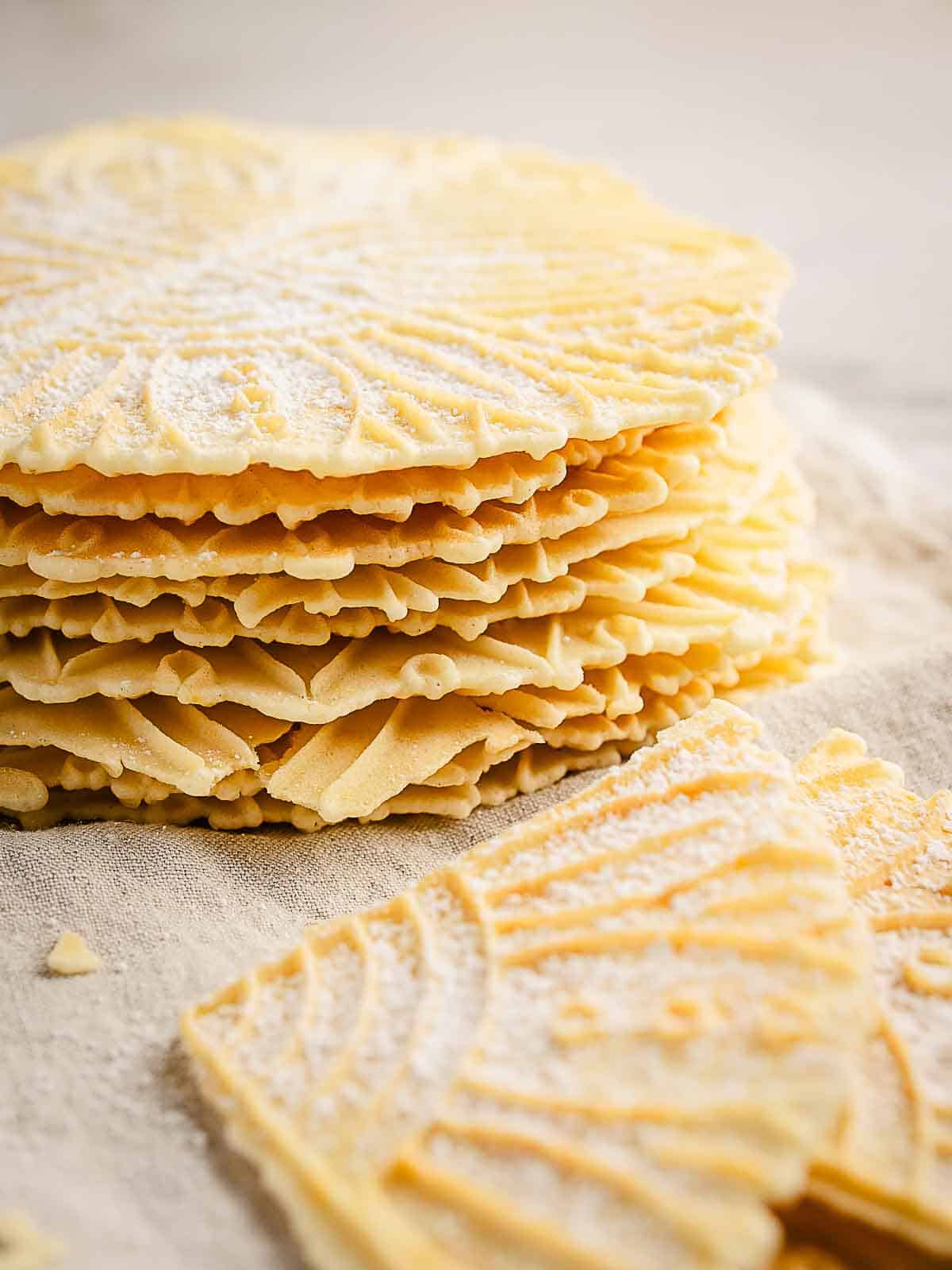
Easy to make using basic pantry ingredients, this Anise Pizzelle Recipe is the ideal addition to any dessert table. With just the right amount of anise extract, these pizzelle cookies are the perfect addition to your holiday baking and so much more!
What are pizzelle cookies?
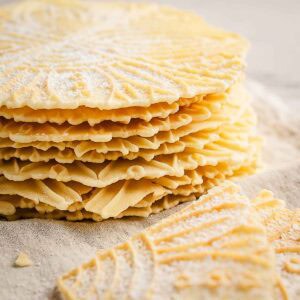
Pizzelle cookies are crispy Italian waffle cookies from the region of Abruzzo. Sometimes also known as ferratelle, neole, or cialde. This Anise Pizzelle Recipe is the traditional version using anise and oil. However, there are many flavors like Lemon Pizzelle and Chocolate Pizzelle. Some recipes swap out the oil for butter and are very similar to Norwegian Krumkake.
It’s thought that pizzelle or ferratelle may originate from an ancient Roman dessert, known as Crustulum. What is known is that in the 18th century, a traditional gift from noble families to their brides would be an iron used to make pizzelle. These were made especially for the bride, often with her initials, the family’s initials, or the family crest.
Why you’ll love this recipe
- Holiday Recipe: This Italian Anise Pizzelle recipe, just like my Gingerbread Pizzelle, is ideal to include in your holiday baking.
- Everyday Recipe: While this is a perfect recipe for Christmas, it’s too good to have only once a year! Put them on the table for Easter, Valentine’s Day, Mother’s Day, or Father’s Day. Whatever the occasion, these Anise pizzelle cookies are perfect!
- Versatile: Anise pizzelle cookies come off the iron soft and pliable, which means you can shape them into cups, cones, or cannoli-style shells. Fill them with my cannoli filling for a no-fry Italian cannoli.
- Simple: If you’re looking for a no-fuss holiday cookie that is simple to prepare, this is the one for you. All you need is a bowl and a whisk, and in just a few minutes, you’ll have the pizzelle batter ready.
For complete ingredient quantities and full instructions, please scroll to the printable recipe card at the bottom of the page.
Ingredients
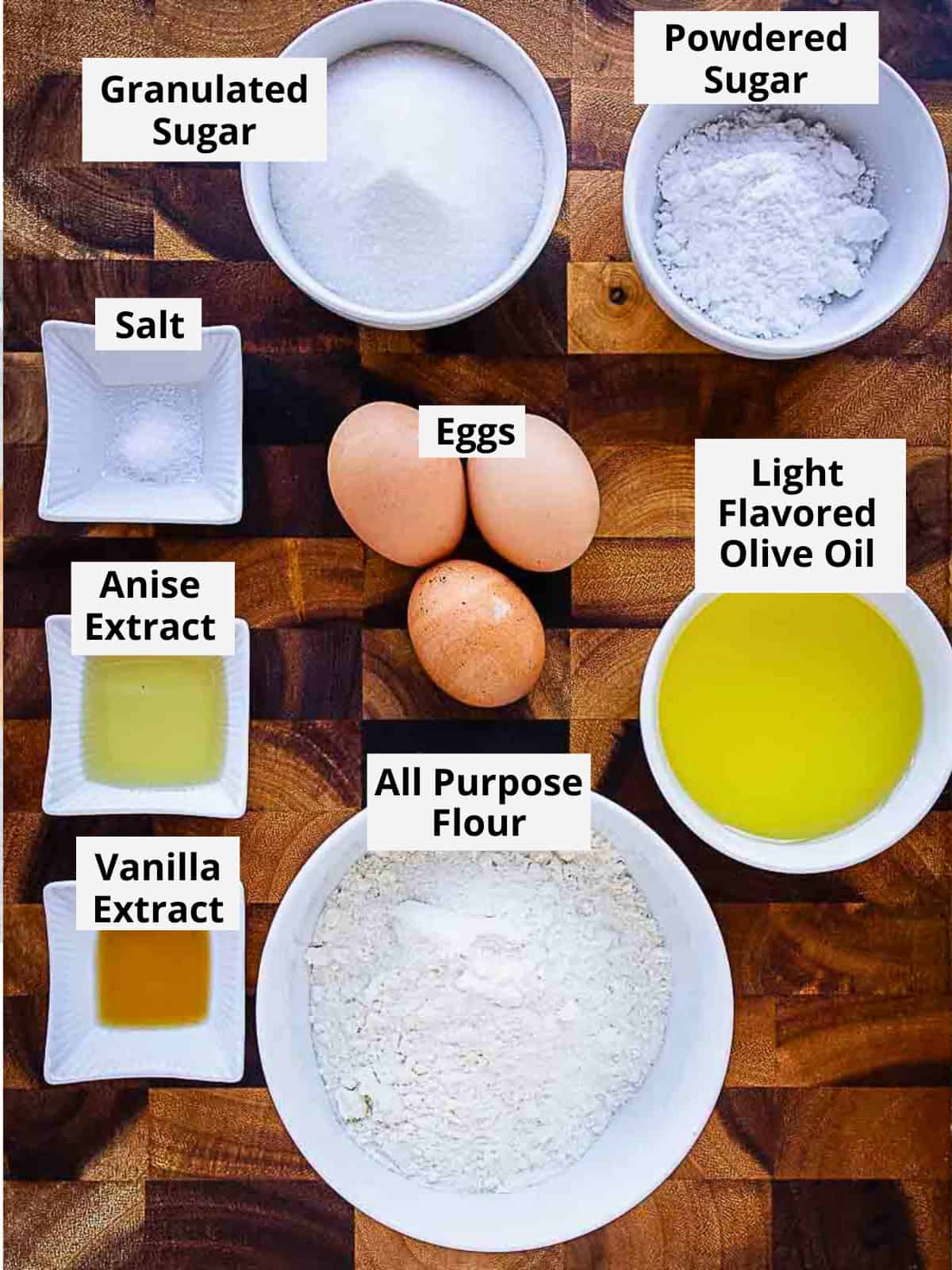
- Anise extract – You can’t have an Anise Pizzelle Recipe without anise, right? I use anise extract. If it’s not available in your local grocery store, you may have to look online. Take care not to confuse it with star anise (Illicium verum), which has a different flavor.
- Eggs – I prefer to use free-range eggs, but use whatever you have.
- Granulated sugar – If you’re grocery store has superfine sugar (also known as caster sugar in some areas), choose it for this recipe as it dissolves easily. However, regular granulated white sugar will work just as well.
- Mild-tasting olive oil – I know many recipes use butter. However, my Anise Pizzelle Recipe uses a mild-tasting olive oil. Avoid a strong olive oil. It won’t work well with this recipe.
- Vanilla extract – Always choose extract, not essence. It is a little more expensive, but you’ll use less. Plus, it’s a less processed product, and you get what you pay for.
You’ll also need all-purpose flour, a pinch of salt, and some powdered sugar if you choose to give you’re anise pizzelle cookies a little sprinkle on top.
See recipe card for quantities.
Instructions
Preheat the pizzelle iron as directed in the manufacturer’s instructions for your particular machine.
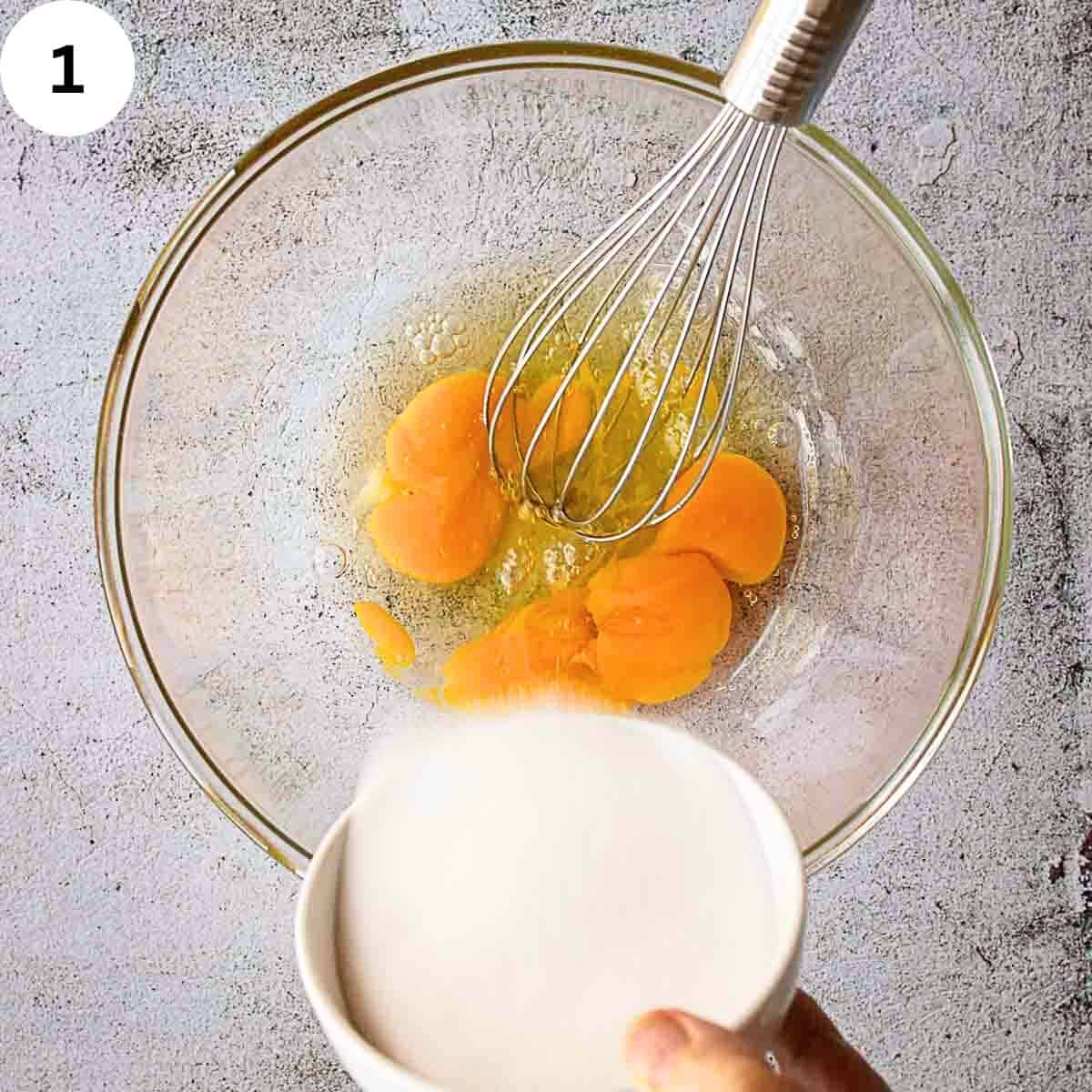
Whisk the eggs and sugar in a medium bowl.
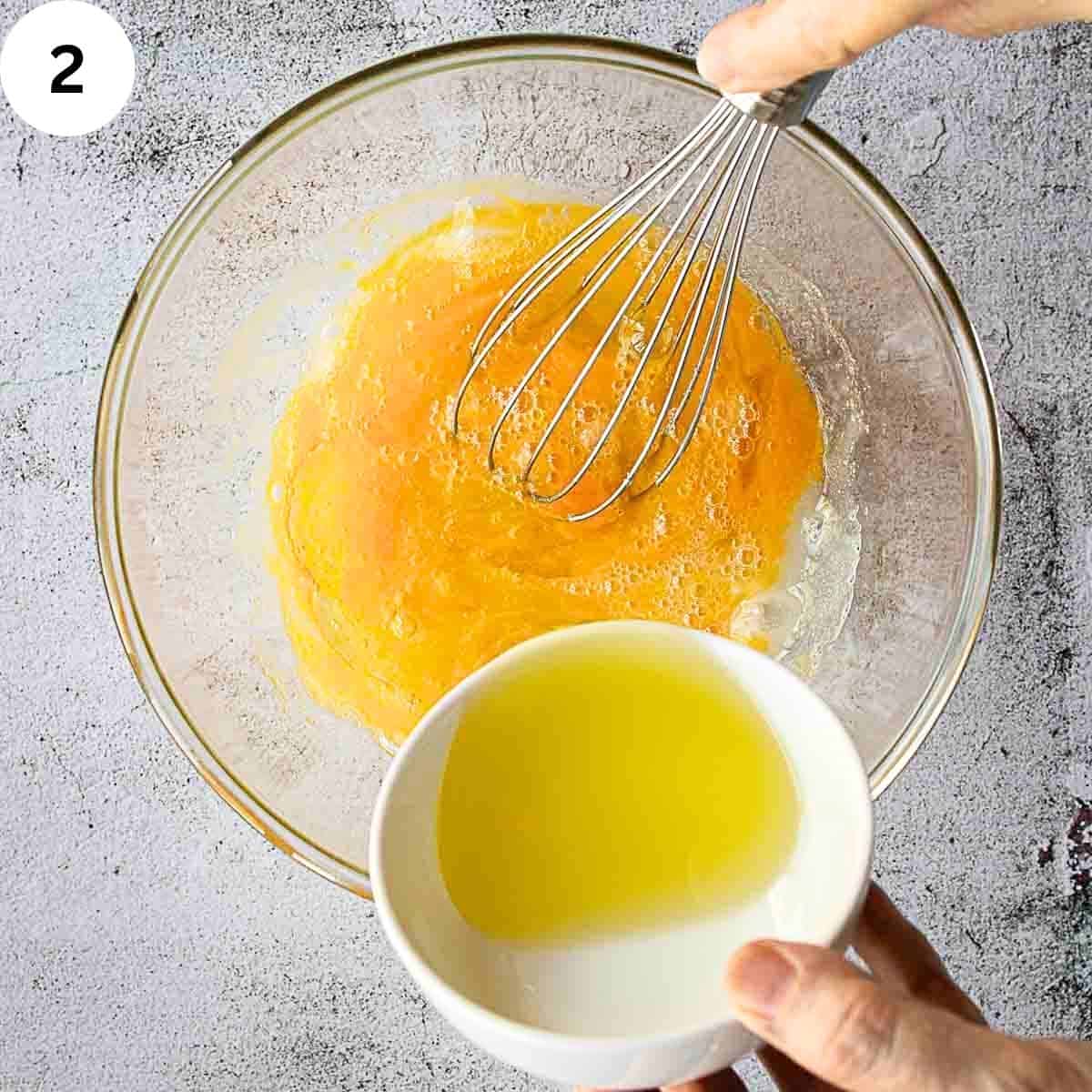
Add the olive oil and whisk until combined.
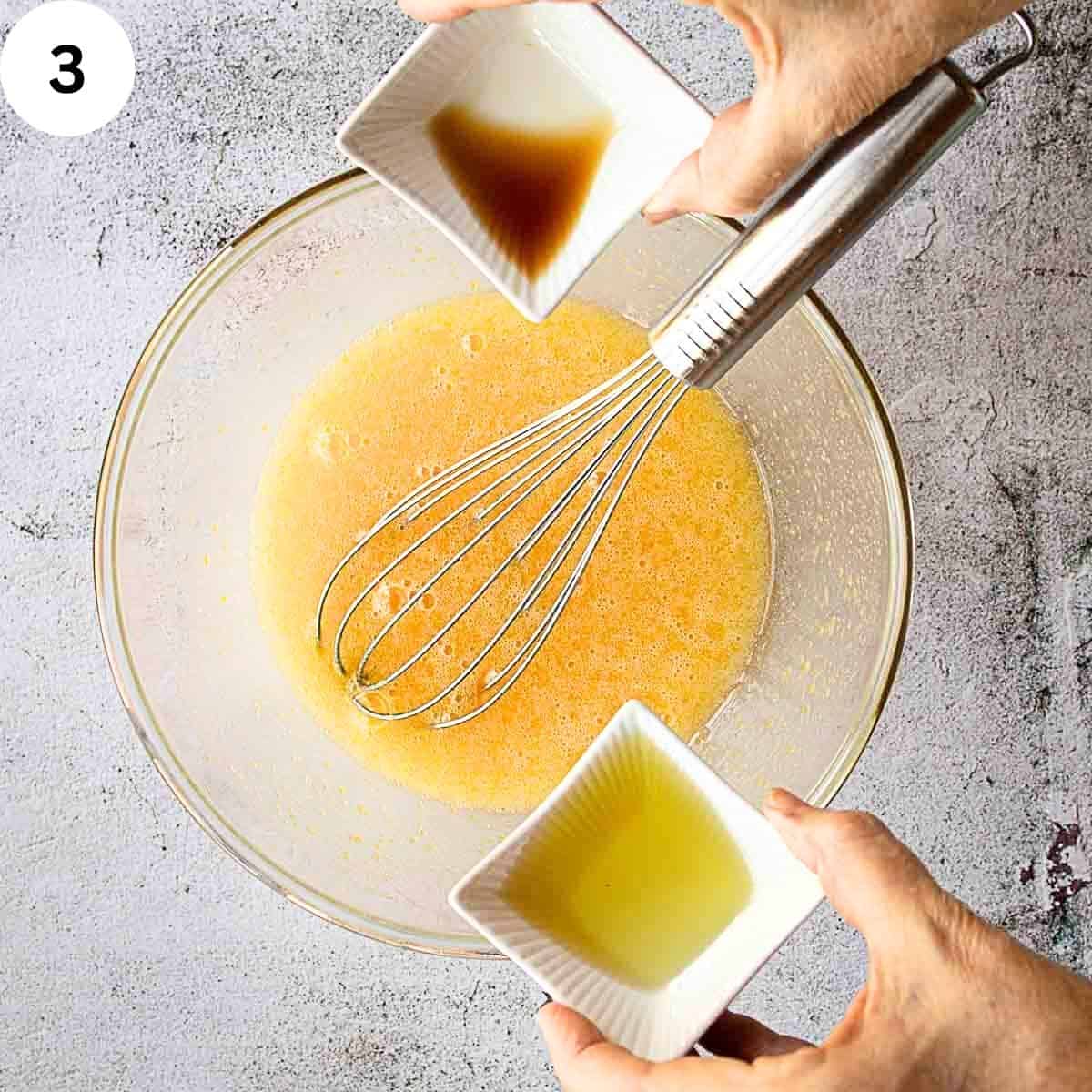
Whisk in the anise and vanilla extracts.
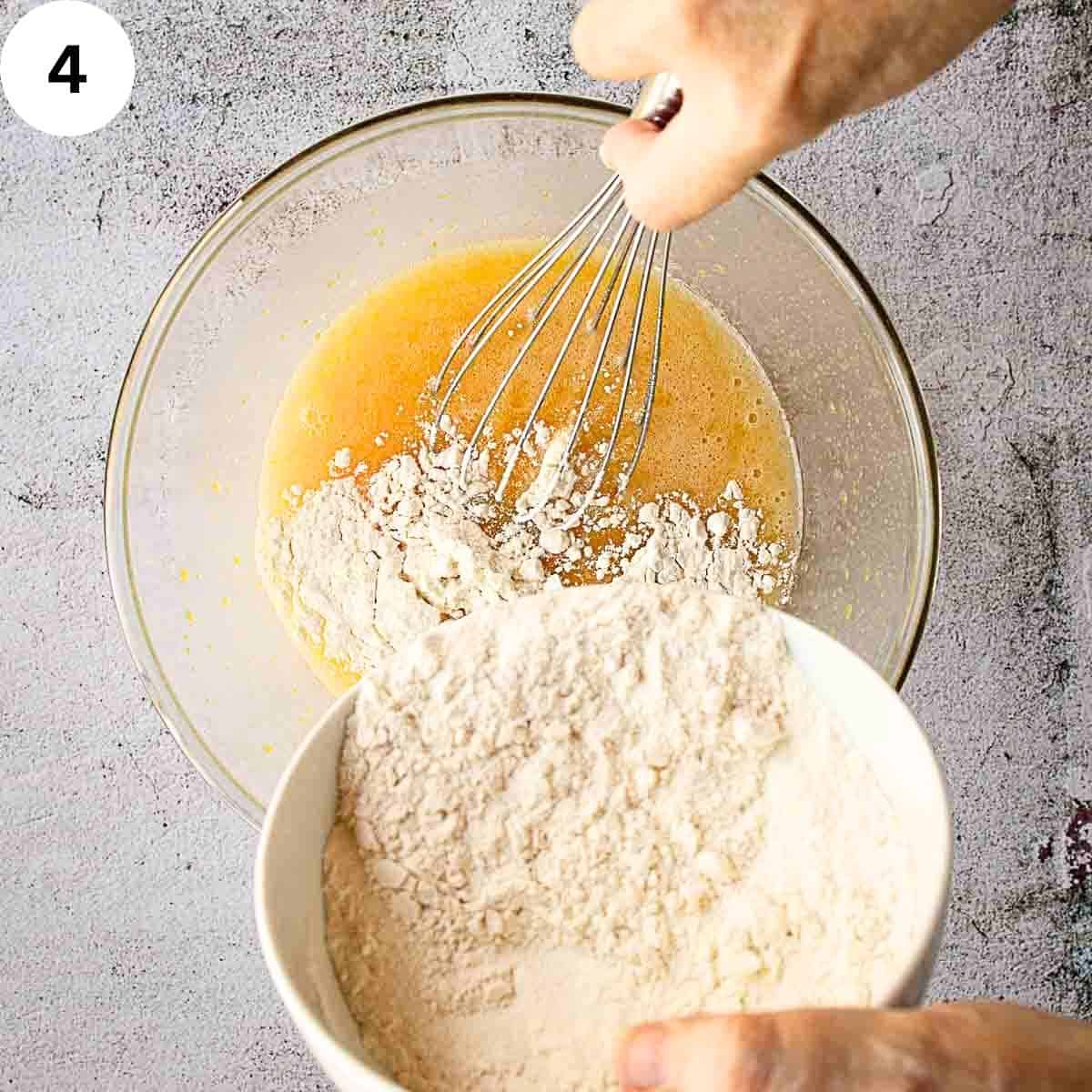
Add the flour and salt.
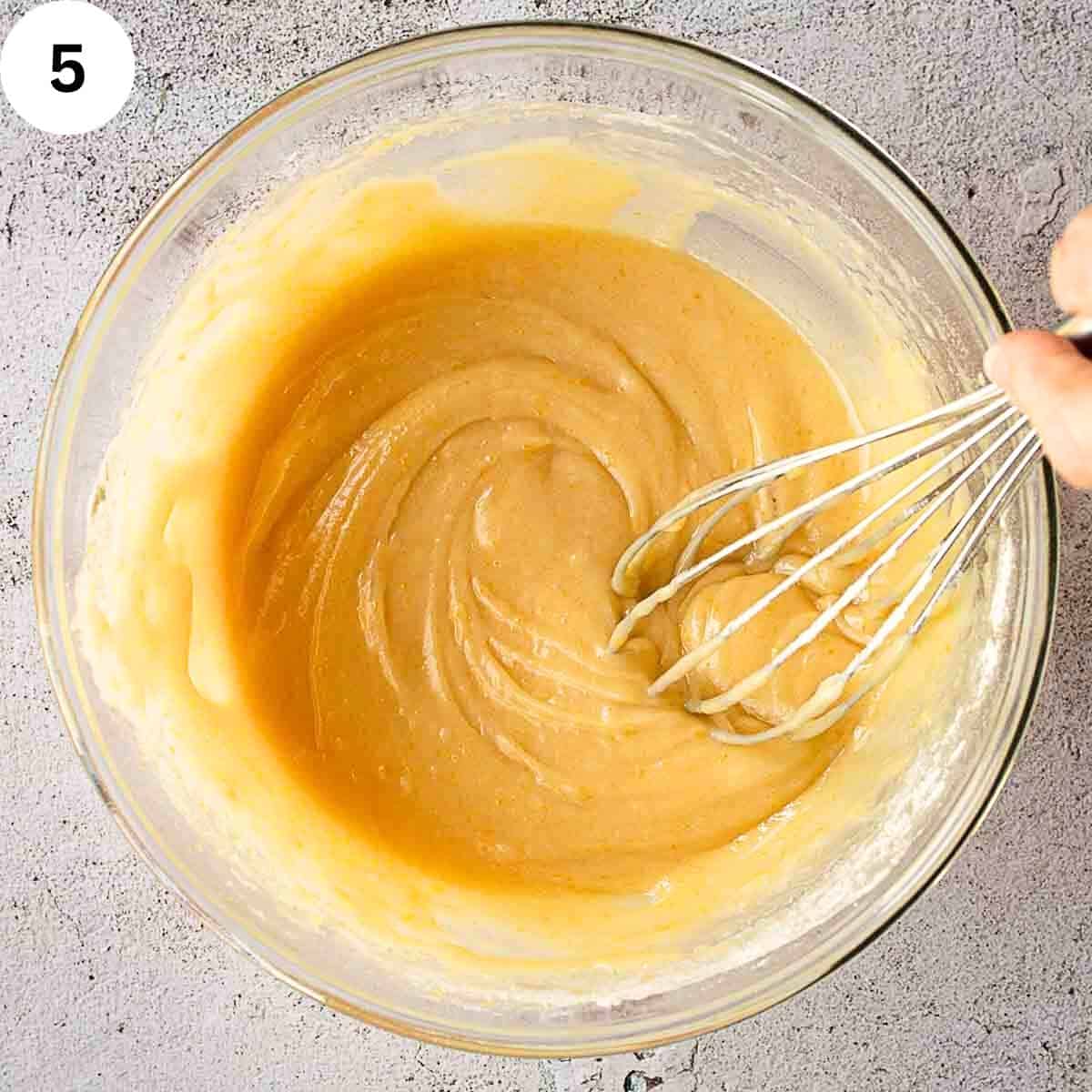
Mix to form a thick, cake-like batter.
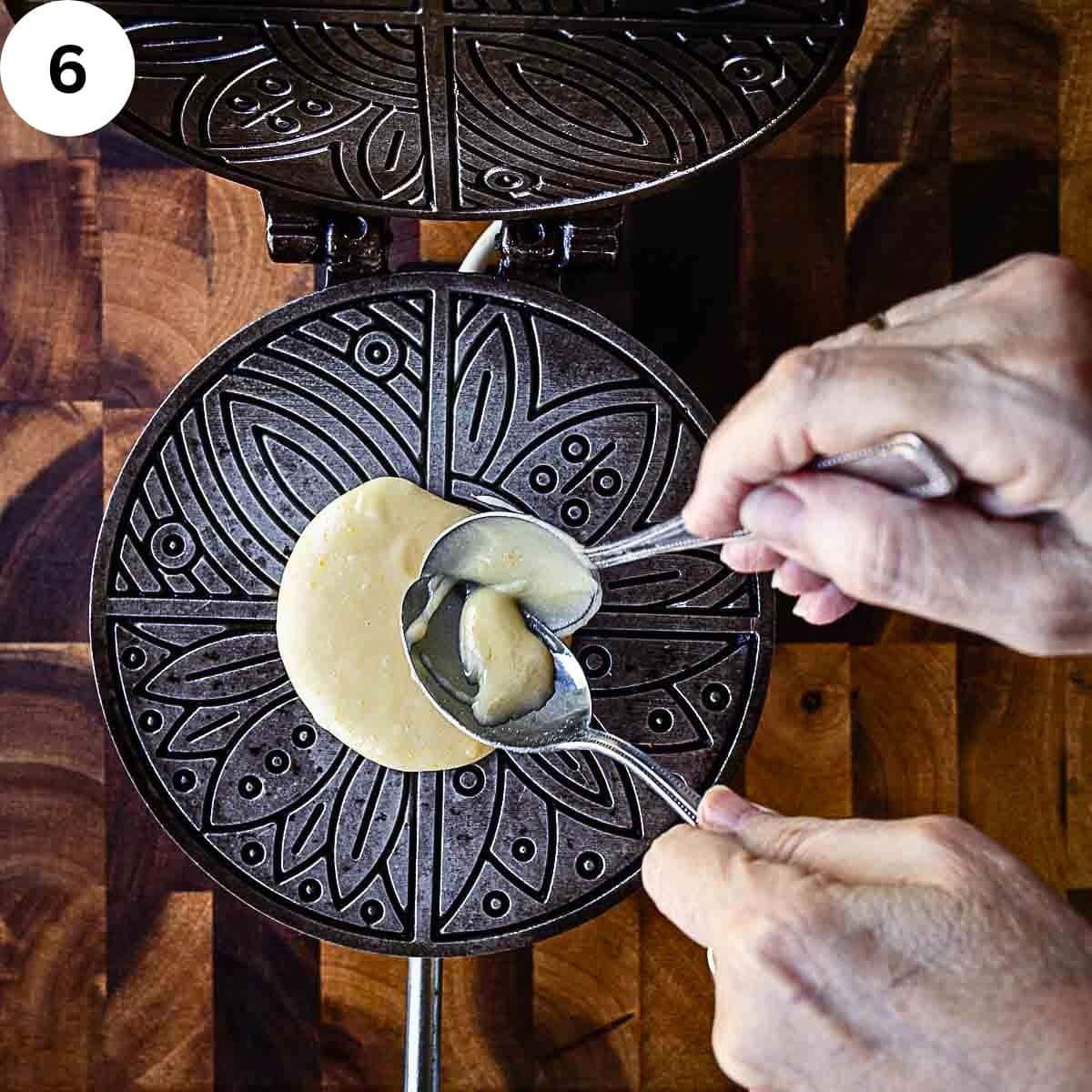
Drop a spoonful onto the preheated pizzelle iron.
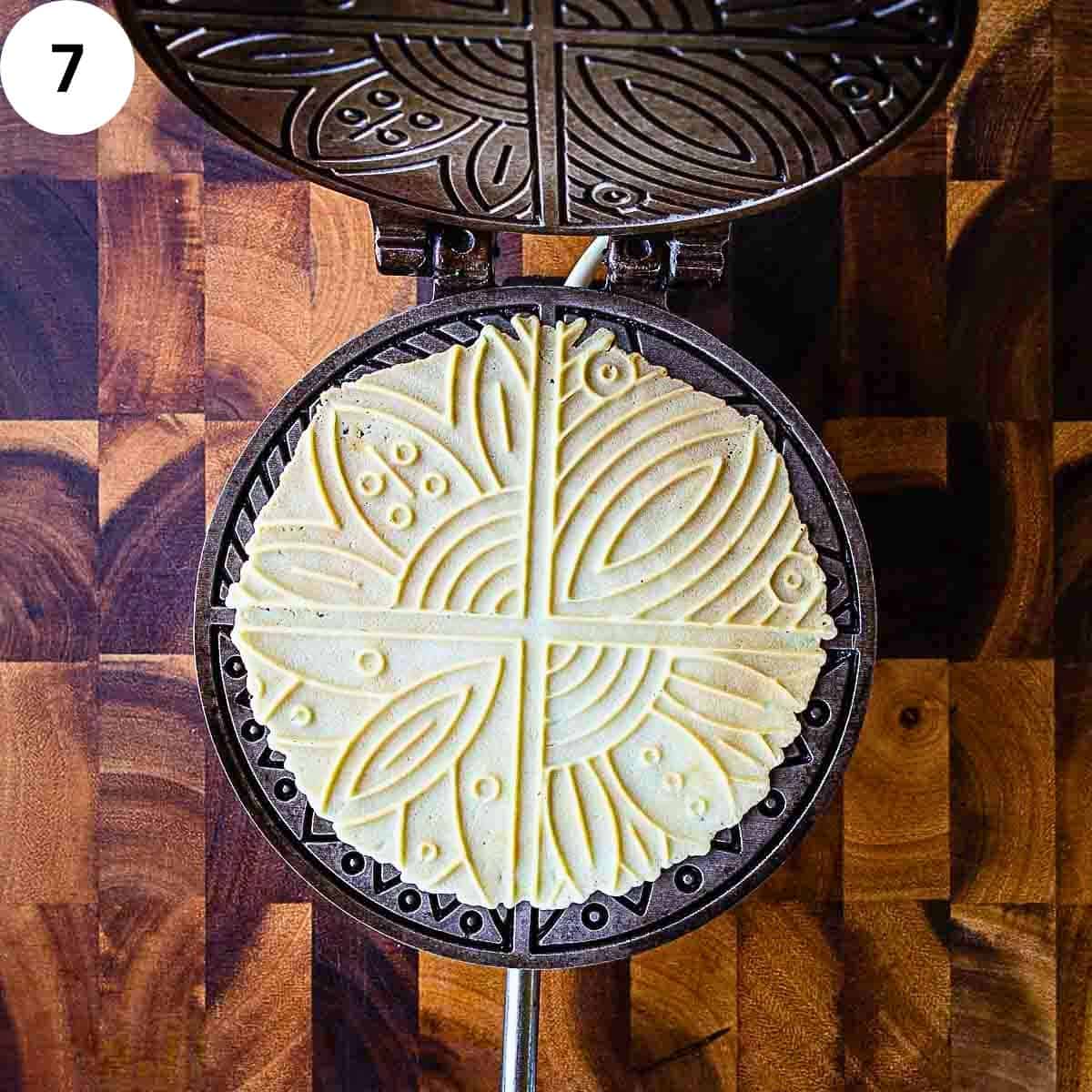
Cook until the pizzelle is lightly golden.
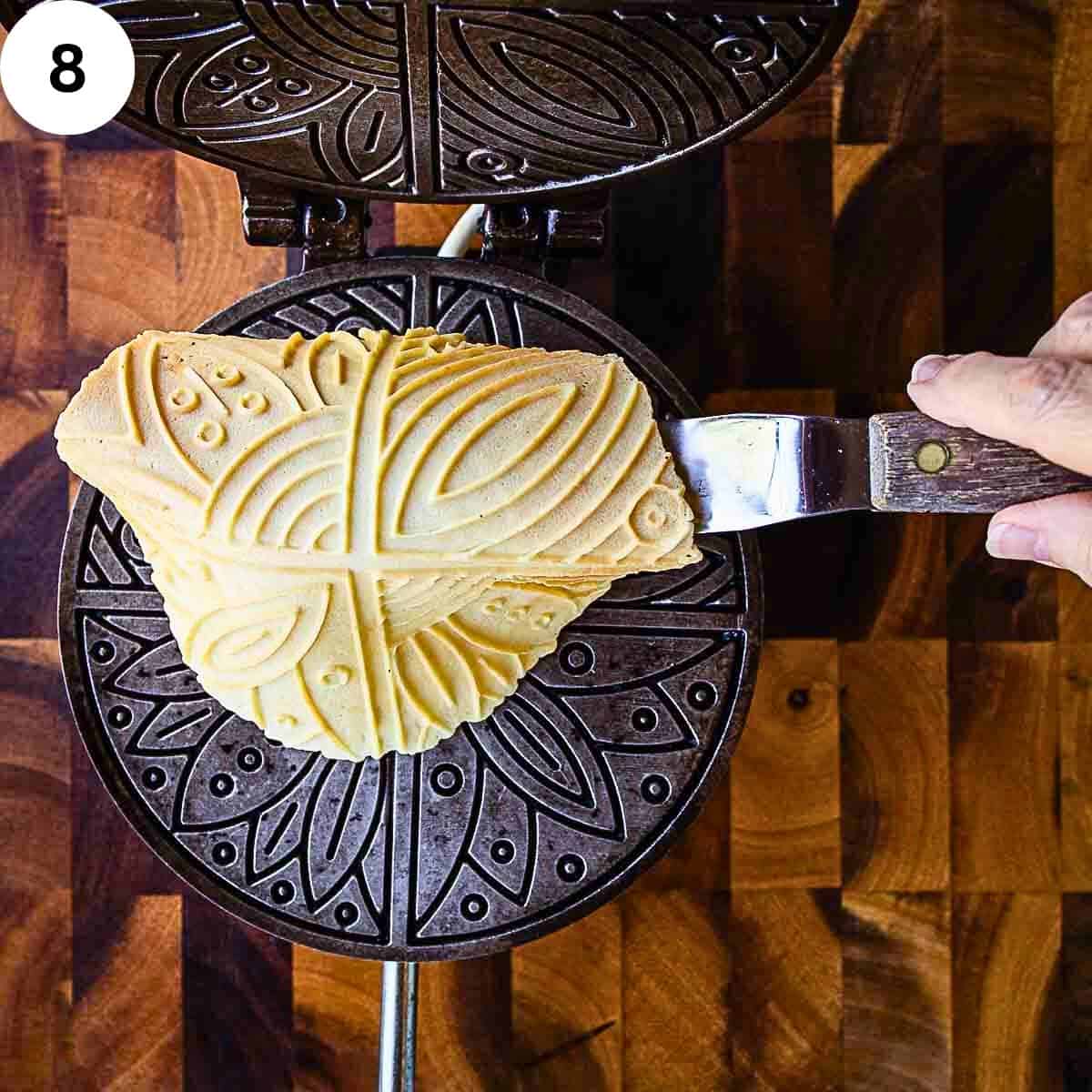
Lift the pizzelle off the iron with a spatula.
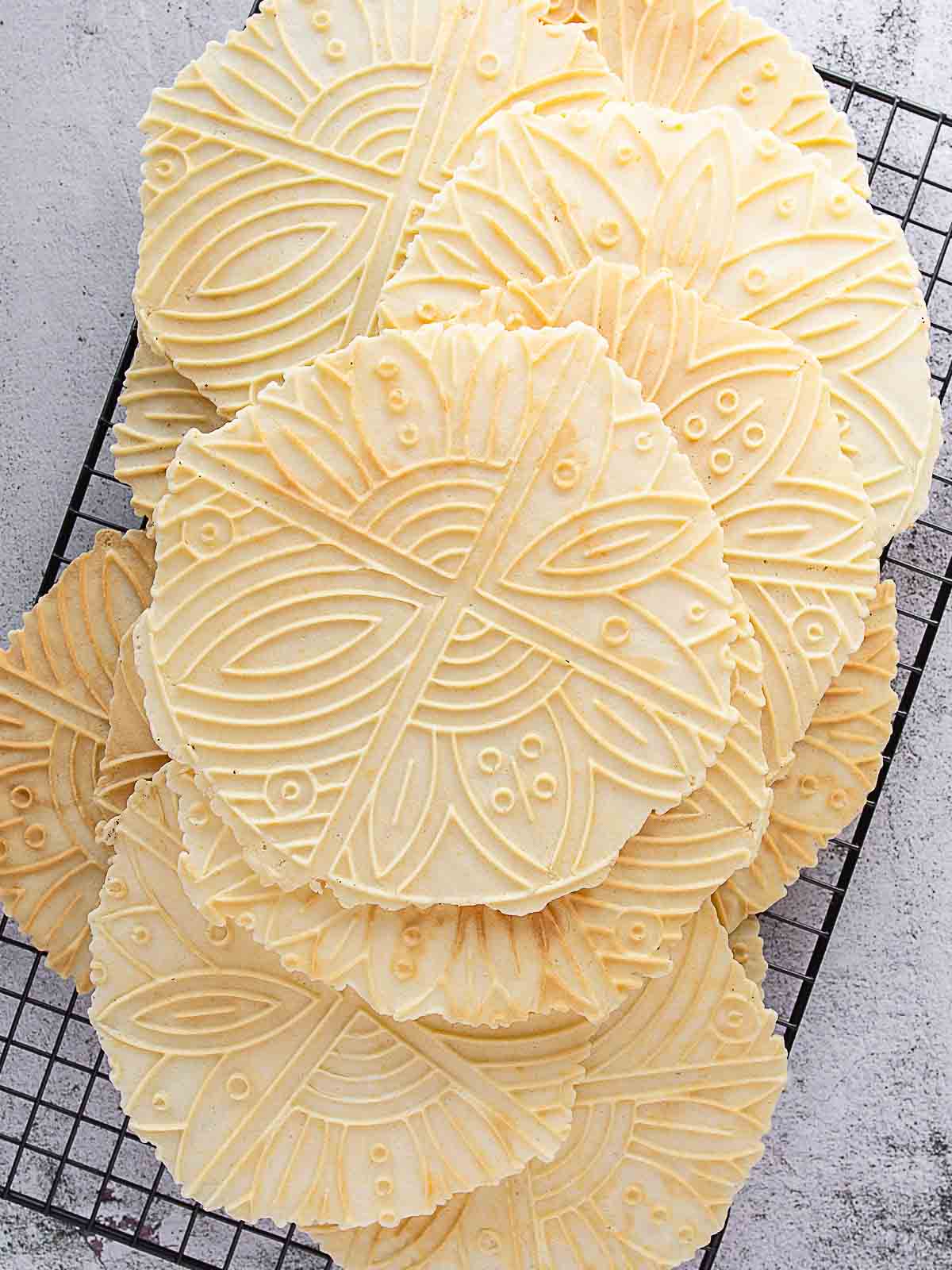
Cool completely on a wire rack before dusting with powdered sugar as I do.
Marcellina’s Hint: Don’t skip preheating the pizzelle thoroughly. A pizzelle iron that isn’t as hot as it should be is often the cause of sticking. Also, if the pizzelle don’t cook thoroughly, this can be one of the reasons why pizzelle become soft.
Variations
- Anise extract: Anise extract can be replaced with anise oil, if you can find it. Anise oil is concentrated. Only use half a teaspoon of anise oil for a strong flavor.
- Olive Oil: Instead of olive oil, you can use the same amount of melted butter. Alternatively, use vegetable or grapeseed oil if you prefer.
- Extra flavor: Include one teaspoon of anise seeds for extra fresh flavor and a little texture.
Equipment
What I love about making this Anise Pizzelle Recipe is that all I need is a bowl and a whisk. There’s no need to pull out the stand mixer or the electric mixer. Of course, if it’s easier for you, go ahead and mix the batter up with an electric mixer.
Storage
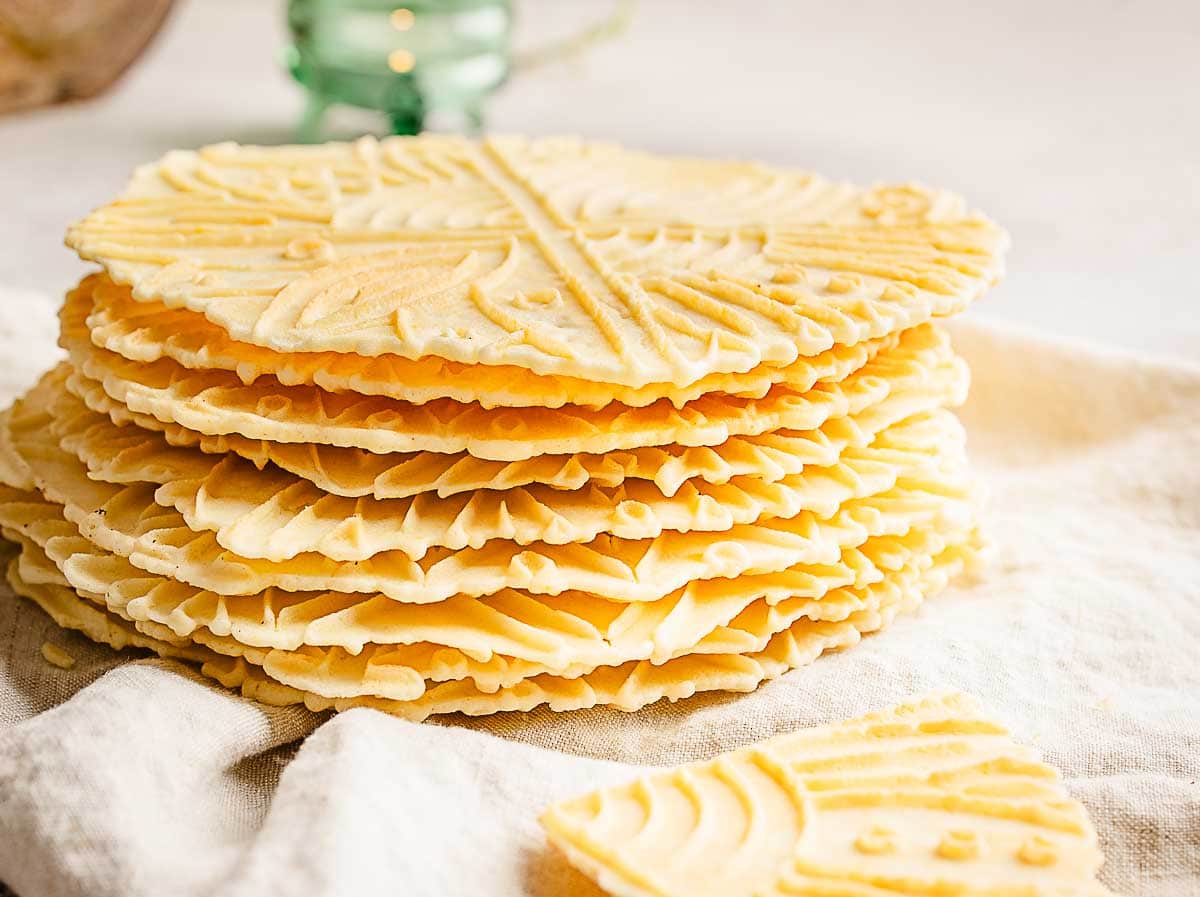
Allow the anise pizzelle cookies to cool completely before packing them into an airtight container and storing them at room temperature. Many people find that a metal tin is the best container. I have not found a problem with a well-sealed, airtight plastic container. I line the container with paper towels to absorb any excess moisture, which may help.
Top tips
- Don’t skip preheating the pizzelle thoroughly. A pizzelle iron that isn’t as hot as it should be is often the cause of sticking.
Depending on your pizzelle iron, you may want to grease the cooking surface with a little oil or butter before heating. This only needs to be done once before cooking. If you have a non-stick iron, it may not need any pre-greasing at all. Check the manual that comes with your iron for the correct instructions. Cooking sprays should be avoided. - My Anise Pizzelle Recipe uses no baking powder. I have tested this recipe with and without baking powder and have found no difference. The pizzelle iron that I use makes thin pizzelle. If the iron you’re using makes thick pizzelle, add 3 teaspoons of baking powder.
- The batter should be thick like cake batter. If it runs off the spoon, add a touch more flour. A runny batter can be the cause of soft pizzelle.
- When you close the iron, the batter will hiss and produce a lot of steam. It’s important that the moisture escapes properly, so the cookies become crisp. Too much moisture means the pizzelle will be soft and limp.
FAQ
Before electricity, pizzelle irons consisted of two hinged iron plates with long handles. The irons were made by the village blacksmith and often embossed with the family’s initials, family crest, flowers, wheat, or other symbols that may reflect the village or family.
These irons were heated over coals or a fire. Once hot, a simple batter of eggs, sugar, flour, oil or lard, and some anise or fennel seeds was spooned into the middle. The iron was closed and placed back over the heat. Both sides needed to be cooked.
It is said that the women prayed the Hail Mary as the pizzelle cooked. When the first half of the prayer was said, the iron was flipped. The second half completed the timing, and by the end of the Hail Mary, the pizzelle should be ready. It was a devotion, but also a good timing system!
If you’re using anise oil instead of extract, use just half a teaspoon to begin with. Anise oil is much more concentrated than anise extract. You can always add a little more if you prefer a stronger flavor. What is just right for me may be too strong or not have enough flavor for you.
There are a few reasons why your pizzelle may be soft. Firstly, there may be too much moisture in the batter. This can happen if more anise extract is added, or the eggs may be very large. Ensuring the pizzelle iron is fully heated prevents soggy pizzelle, as does cooking them long enough to make them lightly golden brown and crispy. Lastly, cooling the pizzelle completely before storing is essential. I almost forgot – humidity is also guaranteed to make your pizzelle soft.
Serving Suggestions
Once you’ve made this delicious Anise Pizzelle Recipe, there are endless ways to serve them. Have them with a coffee or Italian hot chocolate. Serve them alongside desserts like Mascarpone Ice Cream. Sandwich them together with Nutella or make my Pistachio Cream Recipe to use instead.
The wonderful thing about pizzelle cookies, which everyone in Abruzzo knows, is that they can be eaten at any time of the day and are perfect for any occasion. It’s truly the perfect cookie!
Made this recipe?
Please let me know if you liked it by leaving a ★★★★★ star rating and a review below. And remember to subscribe to my newsletter – it’s free!
Italian Anise Pizzelle Recipe
Equipment
- Pizzelle iron
Ingredients
- 3 eggs
- ⅔ cup (130 grams) granulated sugar See Note 1
- ½ cup (120 ml) light tasting olive oil See Note 2
- 2 teaspoons anise extract
- ½ teaspoon vanilla extract
- 1 ⅔ cups (210 grams) all-purpose flour (more if needed to achieve correct consistency)
- pinch salt
- powdered sugar for dusting
Instructions
- Preheat pizzelle iron according to manufacturer’s instructions.
- In a medium bowl, lightly whisk together eggs and sugar.
- Pour in the olive oil and whisk until thoroughly combined.
- Whisk in the anise extract and the vanilla extract.
- Stir in flour and salt.
- The batter should be thick like a cake batter and drop easily from a spoon. It must not be runny enough to pour. Add a touch more flour if it seems too thin.
- Make sure the pizzelle iron is fully heated as described in step 1. Lightly brush both patterned plates with olive oil, avoiding spray oils. Wipe away any excess.
- Place a spoonful of batter in the centre of the iron. The exact amount will depend on the size of your plates.
- Close the lid so the batter presses out to fill the pattern. If any batter oozes from the sides, scrape it away with a spatula.
- You will notice plenty of steam and a gentle hiss. Cook for 30 to 60 seconds. When the hissing slows down, it is usually time to check whether the anise pizzelle are ready.
- Lift the lid and see if the pizzelle are golden. If cooked, slide a spatula underneath and transfer to a wire rack to cool fully.
- Dust with powdered sugar if you like. Store in an airtight container.
Notes
- I prefer superfine, also known as castor sugar. If you can’t find it in your grocery store, white granulated sugar is perfectly fine.
- Remember to use light-tasting olive oil. If you don’t like the taste of olive oil, use another light-tasting oil like vegetable oil.
- Make sure your pizzelle iron is fully heated before you begin. Mine needs a good 15 minutes, though it’s best to follow your manufacturer’s guide.
- Adjust the amount of batter to suit the size of your iron plates. Cooking time will differ from iron to iron.
- Treat the first pizzelle as a test. You might find you need a little more or a little less batter, and the timing may need a small adjustment.
- Let the pizzelle cool completely, then store them in an airtight container.
Nutritional Estimate Per Serving
Nutritional Disclaimer
Nutritional information is an estimate provided by an online nutrition calculator. For accurate results, it is recommended that the nutritional information be calculated based on the ingredients and brands you use.

I have been making Pizzelles for about 50 years. Every Christmas I make hundreds of them as I give as gifts to family, friends and clients. My recipe is very similar to yours however instead of olive oil I use a combination of butter and margarine. I also use a bit less flour as I like them very thin. This year I will follow your recipe using olive oil. I am curious to see if I can tell the difference.
I love your recipes and have made quite a few of them. Wishing you and yours a very Merry Christmas and a Happy and Healthy New Year.
Hello D! I’m glad you love my recipe and have made a few of them. What experience you must have making pizzelle for 50 years! I like the olive oil because it is traditional to the Abruzzo region of Italy where pizzelle originated. However, I have made them with butter and really love the flavor it gives. I find the olive oil ones a little lighter but I’d love to know what you think. Buon Natale to you and your loved ones this Christmas and may the New Year bring goodness and kindness to you.
Marcella, I love your large pizzelle iron. Can you please tell me the brand? I’d love to look into getting one like yours. I have my grandmother’s that is probably close to 100 years old. I’d love to retire hers to a place of honor and have a new, electric baker. Thanks for this recipe!
I’m glad you love this recipe! How wonderful that you have your grandmother’s iron! What a treasure, indeed!! My irons are the Italian brand CBE. In the USA, you may be able to get them from Destination Abruzzo. In Australia, I get them from Costante Imports. These may also be available from Amazon. I hope that helps.